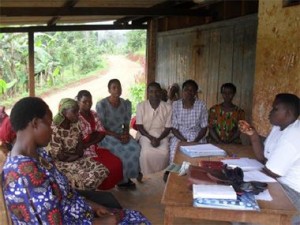
Photo credit: E. Ampaire
This blog post by Elizabeth Bryan, Patti Kristjanson, and Claudia Ringler summarizes recent research by IFPRI on gender and climate change under the CGIAR Program for Climate Change, Agriculture, and Food Security. Click here to read why gender matters for climate change adaptation.
 Have you thought about how property rights and collective action influence your work? Are you interested to find out more about how these institutions influence
- People’s use and management of natural resources, and the sustainability of these resources?
- People’s livelihood decisions and well-being, including access to opportunities, resilience and agency?
- Gender relations and marginalized groups?
Have you realized property rights and collective action affect fields as diverse as technology adoption, watershed management, genetic resources and climate-smart agriculture?
If so, we invite you to the new CAPRi website, which aims to serve as a gateway for resources and news on collective action, property rights, and the study of the commons.
read more...
We invite you to participate in an IFPRI survey that aims to assess the knowledge, attitudes, and practices of key NGOs and government agencies working in the areas of climate change adaptation and climate risk management in Africa south of the Sahara (https://www.surveymonkey.com/r/genderandclimatechange). In particular, we hope to determine the extent to which organizations have the resources and tools they need to ensure that the design, implementation, and monitoring and evaluation of climate change adaptation programs are gender-sensitive. We hope that this assessment will enable IFPRI and other research organizations to develop research products that better meet the needs of agencies implementing climate change adaptation programs.
New research, drawing on work done by IFPRI and others, presented in Paris this week by the CGIAR Research Program on Climate Change, Agriculture and Food Security (CCAFS) helps to debunk a few myths that are often the basis for bad policy decisions. Read the article by Jacqui Ashby and Jennifer Twyman here: http://www.ipsnews.net/2015/03/four-fast-facts-to-debunk-myths-about-rural-women/
 This 6-minute animated video gives 3 reasons why agricultural research should be gender inclusive, and 3 ways to do it. The video was created by the International Center for Tropical Agriculture (CIAT) in collaboration with ICESI University (Colombia).
Watch the video here: Gender Inclusive Research: Why and How
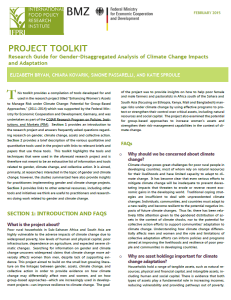 The project, “Enhancing Women’s Assets to Manage Risk under Climate Change: Potential for Group-Based Approaches,” aimed to build on the small but growing literature on the linkages between gender, assets, climate change, and collective action in order to provide evidence on how climate change may differentially affect men and women, and on how group-based approaches--which are increasingly used in development projects--can improve resilience to climate change. In order to facilitate continued research in this area, a toolkit compiling all the qualitative and quantitative tools that were developed for the project was created.
Download the toolkit here: "Research Guide for Gender-Disaggregated Analysis of Climate Change Impacts and Adaptation."
 Watch this discussion forum on "Gender and resilience across the landscape – from Latin America, Africa and Asia" which took place on December 6, 2014, the first day of the Global Landscapes Forum, in Lima, Peru, during COP20. Gender concerns are gaining increasing recognition in climate change negotiations. Although women are believed to be more vulnerable to climate change, data on this issue are scarce. Drawing on research on resilience of men and women in four different landscapes (the Peruvian and Bolivian Altiplano; the Ethiopian Highlands; the Kenyan ASALs; and Bangladesh’s lowlands), watch this discussion on the disparities in men’s and women’s access to and control over key assets needed to cope with climatic shocks and adapt to long-term change.
 COP 20: Climate Change Negotiators Must Consider the Role of Rural Women
By Claudia Ringler, Deputy Division Director, IFPRI
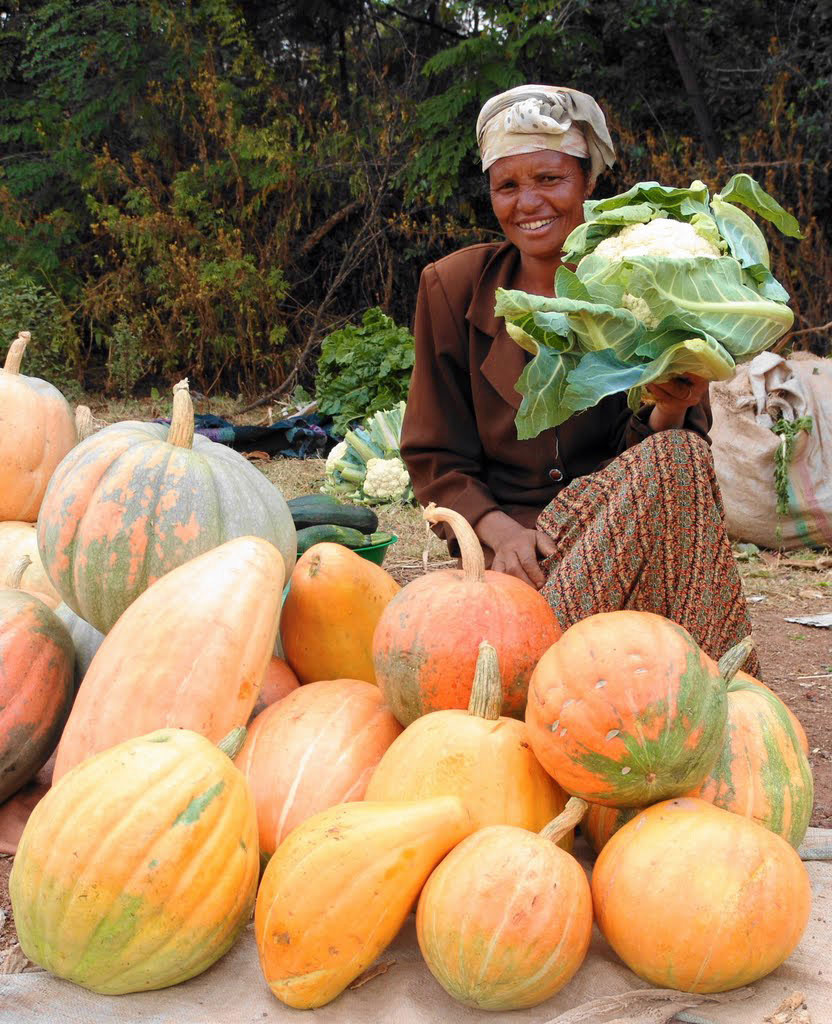
As smallholder farmers in many parts of the world, women play a crucial role in food production. Yet they are the least equipped to adapt their farming practices to climate change. The reason? They have less access and control than men over key assets, such as capital, agricultural information and training, farm inputs, and other resources related to agricultural production. This week, as world leaders gather in Peru to participate in the climate change negotiations, it is imperative that we turn our attention to rural women and focus on policies that increase their ability to cope with climate change.
Click here to access the full article.
 Following up on the themes discussed at the COP side event in Lima, Peru, Ruth Meinzen-Dick, Senior Research Fellow at IFPRI, discusses women farmers’ abilities to adapt to climate change, highlighting the importance of access to climate change information in rural farming communities in Africa. The interview was conducted by Laura Angela Bagnetto at Resources for the Future.
Wednesday, December 3, 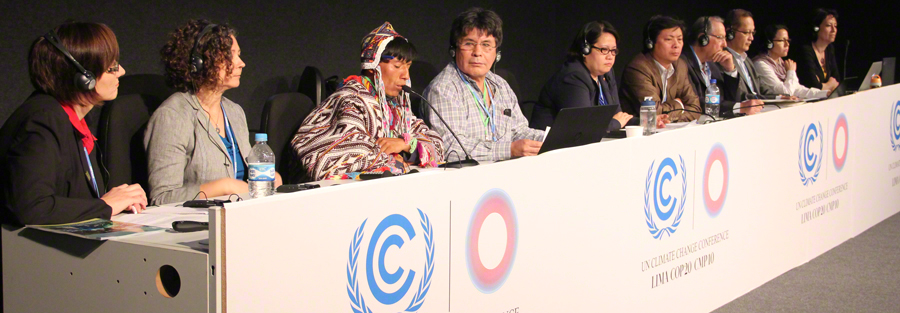 IFPRI hosted an official COP20 side event on "Increasing the Resilience of Farming Communities to Climate Change through Shared Learning and Adaptation Decision-Making with a Focus on Gender." The event was co-hosted with the Asociación para la Naturaleza y Desarrollo Sostenible (ANDES) and organized with the University of Missouri.
Click here to read a summary of the event
Click here to access the video which highlights the key messages from the event.